
Huawei P30 Pro review: The big picture
The P30 Pro is Huawei’s photography-focused flagship, competing against the spring batch of Android flagships — chiefly, Samsung’s Galaxy S10 Plus. Huawei has positioned the P series as the premier camera phones on the market, but make no mistake — the P30 Pro is no niche device targeted only at enthusiast photographers.
Everything about the P30 Pro is designed to appeal to mainstream users, from the eye-catching colorways, to the impressive battery life, and top-tier specs.
Huawei P30 Pro takes the best bits of the Mate 20 Pro and adds a terrific camera. Before I started doing this review, I used a Mate 20 Pro as my daily driver and the transition between the handsets has been seamless.
Huawei P30 Pro takes the best bits of the Mate 20 Pro and adds a terrific camera.
The 1000-euro Huawei P30 Pro launched alongside the Huawei P30 (800 euros). The P30 is smaller, has a less-advanced camera, and comes with a lower IP rating. It does offer one big feature you won’t get on the P30 Pro, though: a headphone jack.
What’s in the box
- 40W fast charger
- USB-C earbuds
- A basic clear case
Unlike other manufacturers, Huawei bundles its flagships with the best charger available. It’s the same crazy-fast 40W charger we saw on the Mate 20 Pro. The soft clear case is basic, but still nice to have until you get something more personal. The earbuds are decent, for a bundled product, but you can definitely do better.
Design
- 158 x 73.4 x 8.4mm
- 192g
- Waterdrop notch
- Curved display edges
- USB-C port
- No headphone jack
If you ever played with the Mate 20 Pro, you already know what the P30 Pro feels like. The overall format is the same, but the P30 Pro is a hair bigger. Other than the different notches and camera setups, these phones are almost identical.
The Huawei P30 Pro feels very comfortable in the hand, despite the slippery glass back. It’s a little heavy, but not tiringly so. While most folks will want to use it with two hands, once you slip a good case on, you can definitely use it with one.
The expansive display curves pleasantly on the sides, just like on Samsung’s phones. It’s pretty, but the curves create annoying glare under bright light. If you like flat displays, the regular P30’s got you covered.
The notch on the P30 Pro is small and inconspicuous. As far as notches go, it’s probably the best compromise between form and functionality, as it doesn’t really mess with the notification bar. That was my top complaint about the large notch on the Mate 20 Pro.
The downside? The notch only houses a selfie camera. There’s no laser-based face unlock like on the Mate 20 Pro, and that’s a shame. While the P30 Pro has a camera-based face unlock function, it’s not as good as the laser system. I was able to unlock it by simply showing it a picture of me on another phone. The feature works well in bright light, but falters in low light and when you don’t look at the phone straight on.
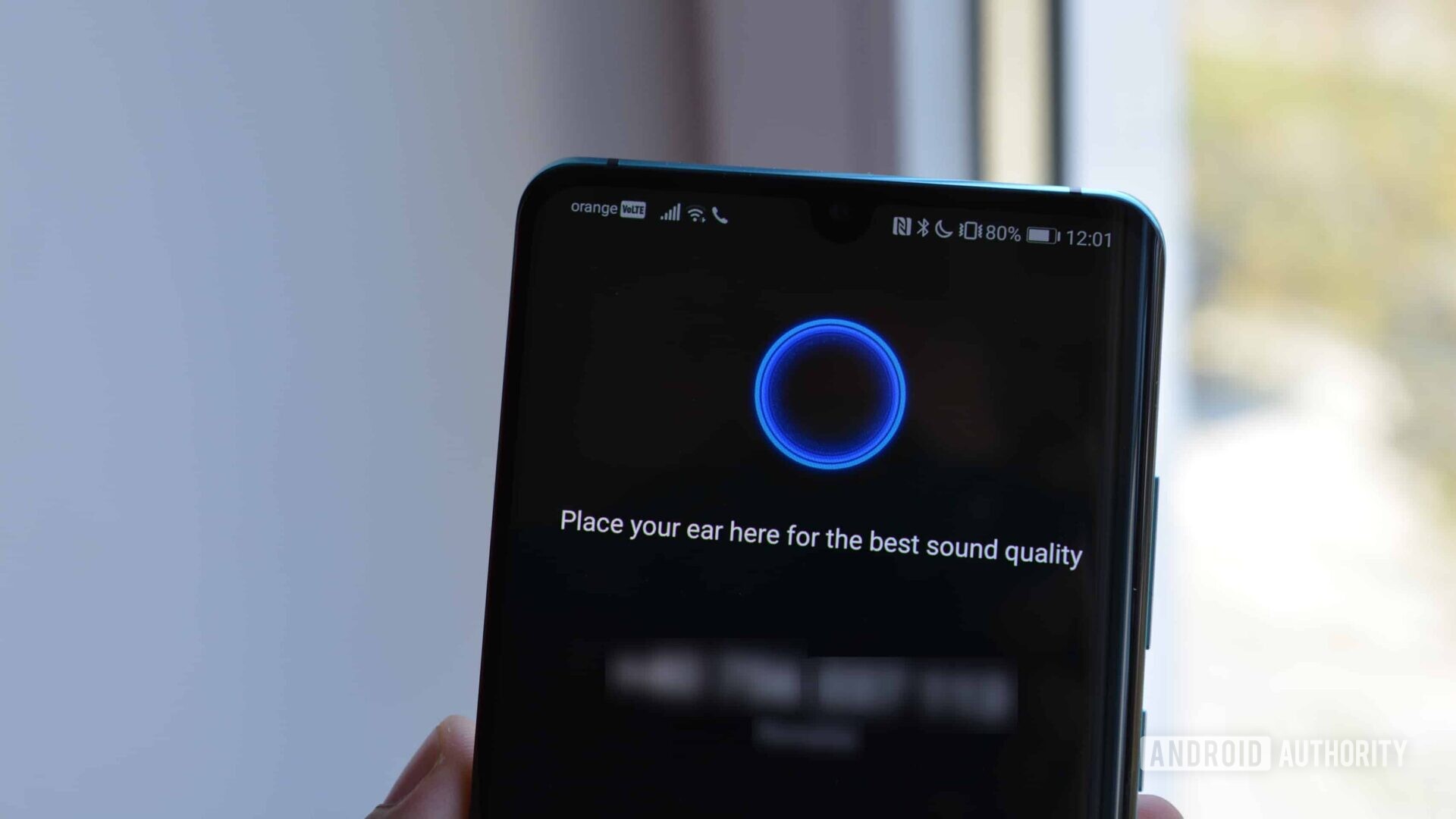
Another thing ostensibly missing is the earpiece speaker. There’s no grille at all, making for cleaner lines at the top. Huawei embedded the speaker beneath the screen. It seems so obvious, but it’s no mean feat, and Huawei’s implementation works great. It’s based on a technology called “electromagnetic levitation” that’s different from the piezoelectric speakers used in previous embedded designs (most of which were dodgy). Voice calls sound loud and clear, and you don’t even need to press your ear against the screen to hear everything. If you turn call volume up to the max, the speaker can be easily heard from a couple of meters away; set it below 50 percent to keep your calls private.
For regular audio, there’s a single speaker at the bottom. According to Huawei, there was no room for an audio jack. ¯\_(ツ)_/¯.
Like the Mate 20 Pro (and a lot of phones these days), the Huawei P30 Pro has an in-display fingerprint reader. Is it any better compared to the Mate? In my experience, it works about the same. It’s not as fast or accurate as conventional sensors, but it’s still fine for daily use. As long as you press your fingerprint firmly on the screen, you’ll get good results.
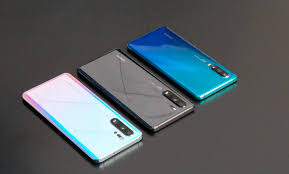
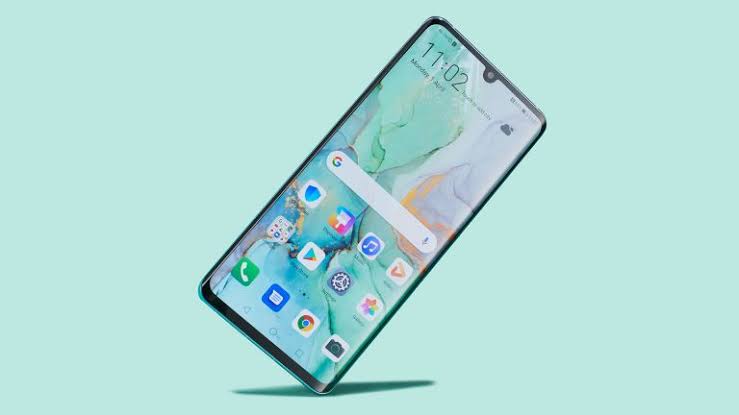
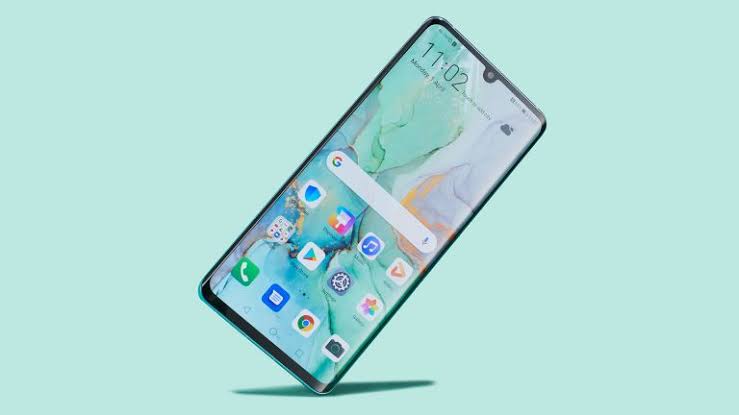
Other than the large cameras, the design of the back is quite simplistic. The flashy colors make up for it. All versions feature gradient colorways, except the plain Black one. You can see the Aurora and Breathing Crystal versions in the pictures in this post. The most eye-catching one is probably Amber Sunrise, a lush cocktail of red and orange that just screams “pick me up.”
Overall, I really enjoy the P30 Pro’s design. It’s not novel, but it’s polished and comfortable to use. And man, those colors are lovely.

Display
- 6.47 inches
- 1080 x 2340, 19.5:9
- OLED
- HDR10, DCI-P3
- 398 ppi
- Always-on display
Most high-end phones now feature beautiful OLED screens, and the Huawei P30 Pro is no exception. The pixel density, brightness, and contrast levels are on point. By default, display colors are set to Vivid, which I prefer over the slightly warmer Default mode. You can easily pick a custom color setting as well.
The P30 Pro features a simple always-on display that shows the time and some notifications. You can’t customize it beyond setting a schedule for it, and you can’t wake up the phone with a double-tap, which is a real first-world problem for me.
For the record, the regular P30 features a 6.1-inch Full HD OLED display.
Performance
- Huawei Kirin 980
- Octa-core
- Mali-G76 MP10
- 8GB of RAM
- 128, 256GB or 512GB of RAM
- Nano memory card slot
The Huawei P30 Pro performs admirably. It’s as fast and smooth as you’d expect a phone of this caliber to be. Not counting a few hiccups in the first hours I had the phone – which can be chalked up to installing all the apps – I encountered no performance issues whatsoever.
The P30 Pro features a proprietary file system that helps performance. Most users won’t ever notice it, but this deep-level customization gives the phone a bit more oomph when transferring files to and from its storage, in addition to slightly lower app start times.
Speaking of storage, don’t buy a microSD cardfor your new P30 Pro. The phone has a card slot, but it only works with Huawei’s proprietary Nano Memory format, just like the Mate 20 Pro.
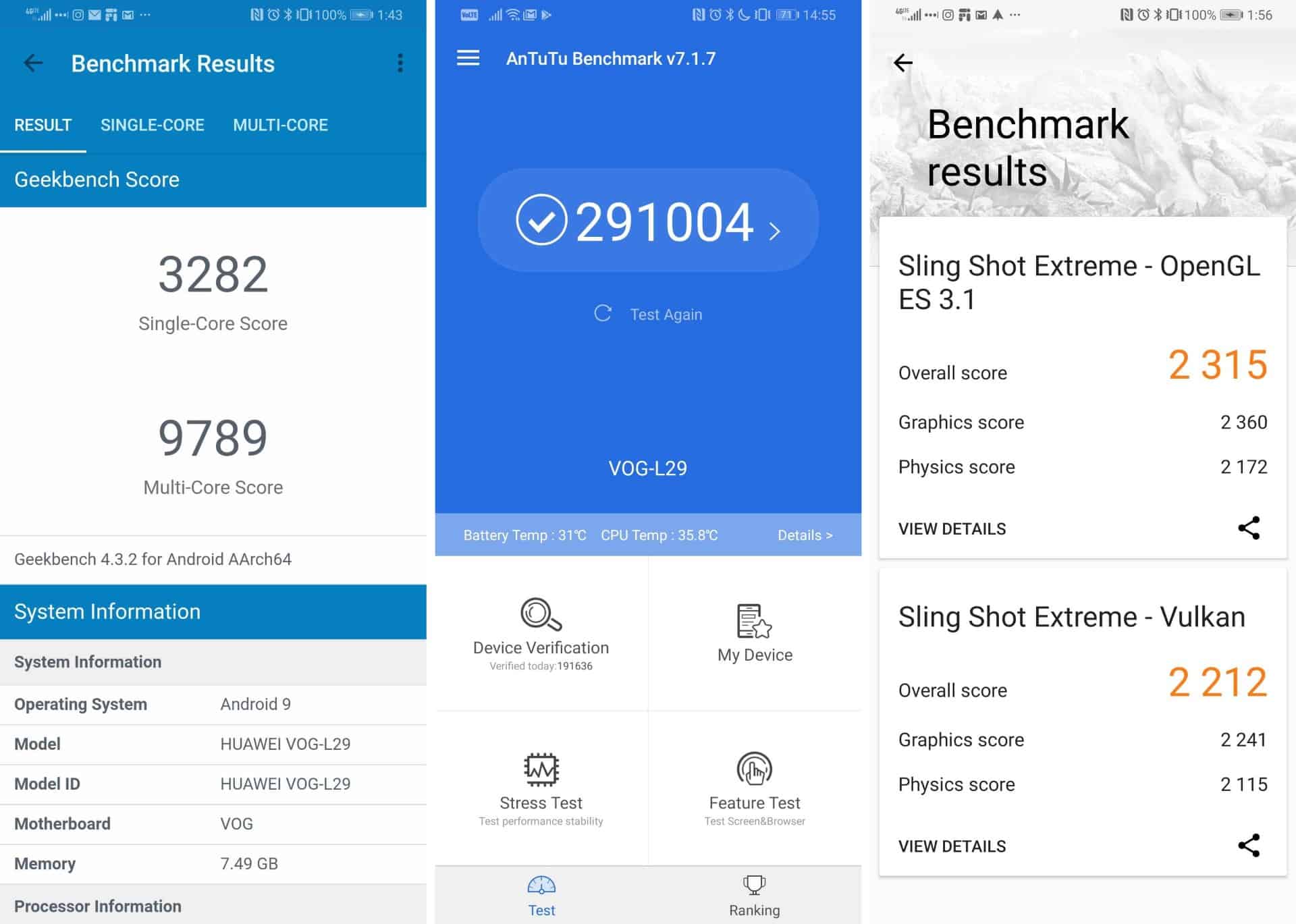
The Huawei P30 Pro gets solid scores in benchmarks, but nothing to brag about. In AnTuTu, for instance, it scores around 290,000 points, a good 40,000 points behind the Galaxy S10 Plus. In Gary’s Speed Test G, the P30 Pro (like the P30) finished the course in 1m:45s, a bit behind the Galaxy S10 Plus’ 1m:33s.
If you really want the best performance, you can enable Performance Mode from the battery settings, though I don’t recommend it. I did not see a visible improvement when gaming, but I did notice a hit on the battery life. If you decide you need it, don’t forget to turn it off afterwards.
Battery
- 4,200mAh
- 40W fast charging
- 15W wireless charging
- Reverse wireless charging
After the excellent camera, the P30 Pro’s battery is its best feature.
I was able to get between 8 and 9 hours of screen-on time. The phone was mostly connected to Wi-Fi, with auto-brightness and the dark mode on, and Performance Mode off. My usage was a mix of plain internet browsing, using Sync for Reddit, watching lots of YouTube, and some gaming. David, who did the Huawei P30 Pro review video, got even better screen-on time of 9 to 10 hours. That’s despite using his phone’s roaming cellular connection over in Morocco. Both of us were able to go through two days of usage without any issues.
After the excellent camera, the P30 Pro’s battery is its best feature.
The P30 Pro lasts even longer than the Mate 20 Pro, which has the same battery size and core specs.
When the P30 Pro eventually runs out of juice, it’s really easy to fill it back up. The charger in the box is a 40W model, which is much faster than other fast chargers out there. It can charge the P30 Pro up to 70 percent battery in just 30 minutes. It’s really impressive. Support for 15W wireless charging is also great.
Like the Mate 20 Pro and the Galaxy S10 Plus, the P30 Pro can wirelessly charge other devices. This reverse wireless charging function is meant for small gadgets like wireless earbuds, smartwatches, or maybe an electric toothbrush. You can use it to top up other phones, but, at just 2.5W, it won’t be a good experience. As a side note, Samsung’s flagship is a bit faster at reverse charging, but not by much.
Camera
- Standard: 40 MP, f/1.6, OIS
- Pixel-binned 10MP images
- Ultra-wide: 20MP, f/2.2
- Telephoto: 8MP, f/3.4, OIS
- Time-of-Flight camera
- 32MP selfie camera
Chances are you’re here for the camera impressions. Everything else about the Huawei P30 Pro is impressive, but not really new.
The P30 Pro has three main cameras and a Time-of-Flight (ToF) sensor that measures the distance to objects in the field of view. The main 40MP camera is what you’ll use in most cases. Because it uses pixel binning, it saves 10MP images by default, but you can switch to the full 40MP resolution if you prefer it. For groups of people or landscapes, you can switch to the ultra-wide camera. If you need to bring your subject closer, switch to the telephoto.
If it all sounds daunting, don’t worry – you don’t need to be a photography pro to master the P30 Pro. It’s very simple to use once you learn its quirks, allowing you to fully focus on getting the best shot.
We have a full explanation of the P30 Pro camera system here. Full size versions of the images in this review are available on Google Drive.
The camera is in a class of its own.
In general, pictures taken with the P30 Pro look great, with crisp detail, pleasant colors (without going overboard), accurate white balance, and good dynamic range.
The zoom ability is impressive: where most phones only support digital zoom, the P30 Pro can zoom in optically up to 5X and then switch to lossless zoom until 10X. If you really want to get close, digital zoom goes up to a whopping 50X. In the real world, you’ll be able to use this zoom ability to capture more detail, frame your shots better, and separate your subject from the background.
In good light, images shot at 5X and even up to 10X look very crisp, without the smudgy effect you see on most other phones. Don’t expect the smooth clarity of a big fancy DSLR, but the P30 Pro’s zoom is as good as it gets when it comes to smartphones.

Zooming in over 10X rapidly decreases image quality, but with good light you can still get decent results even at high magnification. They won’t be crisp or detailed, but in a pinch, they might be enough.
Occasionally, the P30 Pro has trouble selecting the right lens (or, technically, combination of lenses) when swiping to switch zoom factors. In these cases, you get a blurry, shaky image preview, instead of the optically-stabilized image of the telephoto camera. It’s not a major issue, as the phone usually recovers quickly.
Zoom out enough, and the P30 Pro will switch to its ultra-wide camera. The lens on this camera has a smaller aperture and has no OIS, so image quality will be slightly lower. On the Mate 20 Pro, images taken with the ultra-wide lens were pretty dark and blurry, but the P30 Pro seems to be better in this regard. You’ll still get the best results in broad daylight. This camera is also great for macro (close-up) photography.



The portrait mode on the P30 Pro is among the best I have used. This is where that fourth camera comes into play. The Time-of-Flight camera measures the distance to the objects in the scene, allowing the phone to apply more natural-looking blur effects.
Instead of the blanket, uniform bokeh created by other phones, the P30 Pro applies a gradual bokeh that becomes stronger deeper into the background.
Separation between the subject and the background is still not perfect, despite the ToF sensor. Fine strands of hair are still blurred out, but it’s still better than other phones in my opinion. As for the quality of portrait shots, it can vary. Subjects can turn out very crisp, but also slightly dark and blurry, depending on how much light the camera has to work with. David thinks the Pixel 3 XL’s portrait mode is still superior.
You’ve probably seen the hype around the Huawei P30 Pro’s low-light performance. For the most part, it’s real. In fact, the darker the scene, the better the P30 Pro appears to perform.
In very low light – like in a dark room, or in a park at night – the phone uses a long exposure to gather more light from the scene. This is built right into the default shooting mode, and in most cases, it’s so fast you won’t realize it’s happening. The results are stunning. The phone can literally see in the dark and capture things you can’t see with the naked eye.
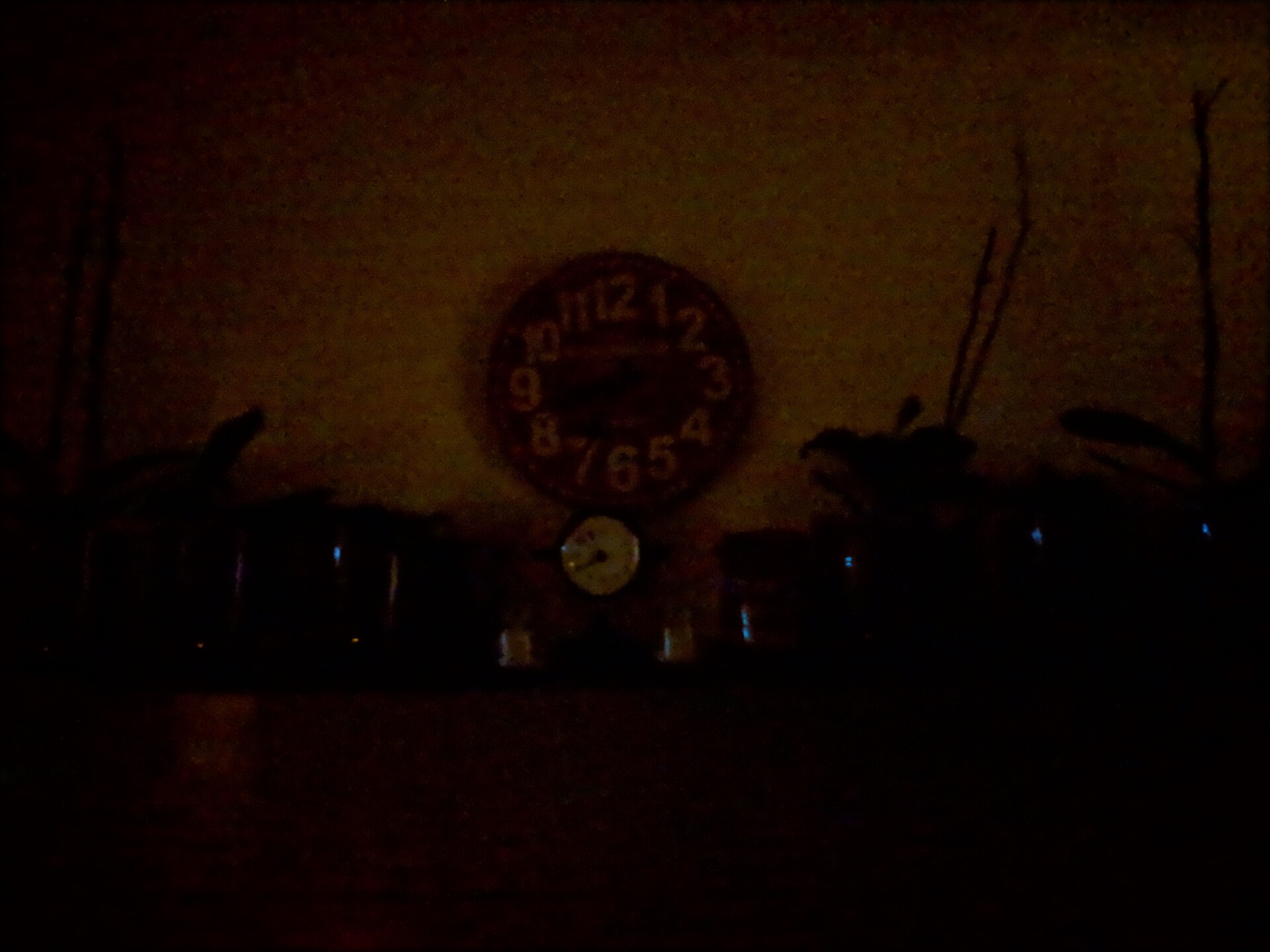
The Huawei P30 Pro easily beats the Pixel 3 XL’s Night Sight mode, which was widely considered the best solution for low-light photography until now.
The best thing about the P30 Pro’s extreme low-light performance is that it’s very seamless. You don’t need to switch to Night Mode (even if that’s still available as a separate mode). Just raise your phone, press the shutter button, wait for a second or two, and you’re done. It really is an incredible feature.
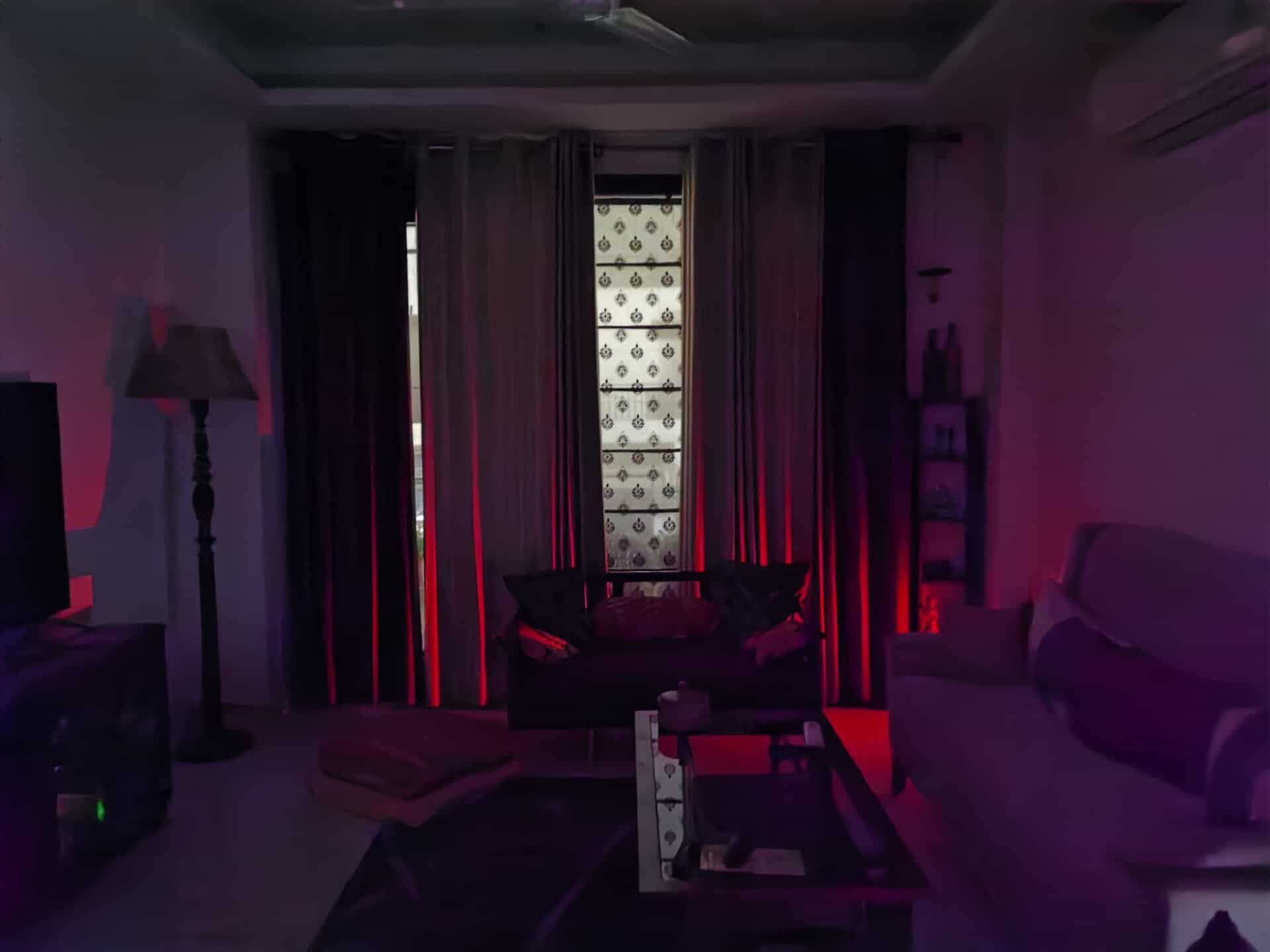
Sadly, the amazing performance in extreme low light does not always translate into amazing performance in normal low light, which is where most people will actually use the phone. Normal low light shots can be quite good, but they can also turn out terrible, just like every phone out there.
The Pixel 3 XL (which has one camera) can outperform the P30 Pro in low light situations, delivering crisper images with better colors. Huawei’s phone also tends to blow out highlights more.
The P30 Pro can definitely stand its own against the Pixel, or any other low-light performer. However, it’s not a notch above, like its zoom or extreme low-light features are.
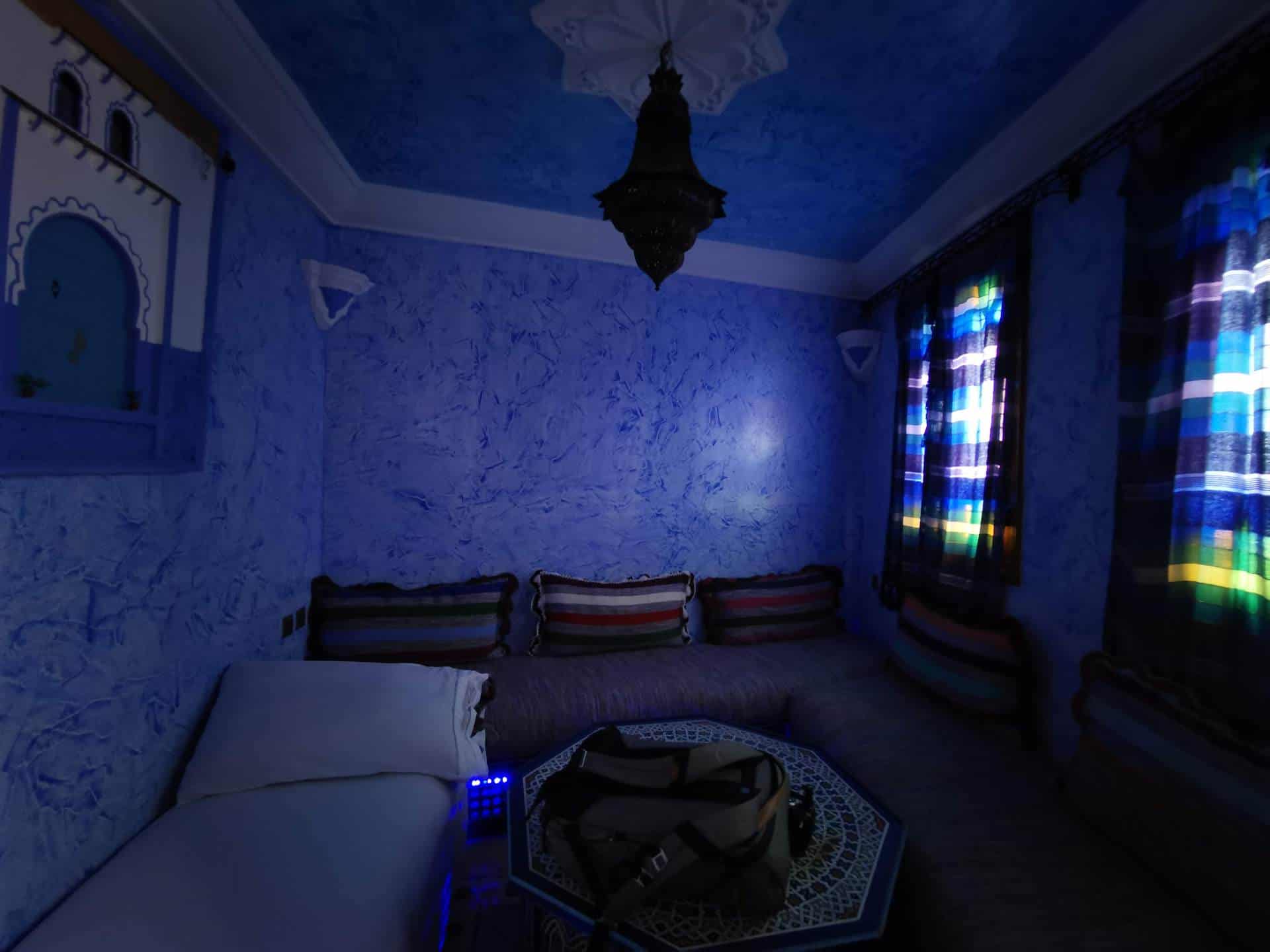

The 32MP selfie camera is more than adequate. Selfies can turn out too soft at times, but I wouldn’t call it an issue.
In video mode, the P30 Pro shoots in 1080p Full HD by default, but you can go up to 4K UHD with a maximum recording time of 10 minutes per clip. The OIS and AIS (software stabilization) work really well to make your handheld shots smoother. Watch the video review above to see a sample David recorded. On the down side, I encountered some flickering and unusual graininess when shooting video in low light. The zoom effect is pretty choppy too, and switching between cameras can result in jarring changes in image quality.
Huawei also teased the ability to record videos with two cameras at a time, so one of them can capture the full scene, while the other can zoom in on the subject. This feature, called Dual-View Video, is coming as an OTA in the coming weeks.
The Huawei P30 Pro has the most versatile and powerful camera of any smartphone.
The Huawei P30 Pro camera app is intuitive and easy to use, especially considering how much hardware it controls. Compared to the Mate 20 Pro, the Master AI mode, which selects the best settings for the scene, is now easier to toggle or quickly turn off for a specific shot. I wish Huawei would’ve made HDR more accessible – it’s still kind of buried in the More section.

Without a doubt, the Huawei P30 Pro has the most versatile and powerful camera of any smartphone. The optical zoom, ultra-wide camera, and incredible extreme low-light performance give you powerful tools for creative shots. Portrait mode is very good. And the overall image quality is competitive with the Pixel 3 XL, if not consistently better.
On June 6, Huawei released a software update that improved image quality on the P30 Pro. The updated firmware improved colors and fixed an issue with videos shot on the front-facing camera.

Software
- EMUI 9.1
- Android 9 Pie
- Dark theme
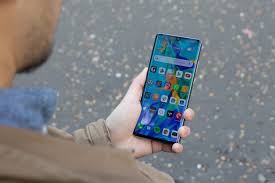
The Huawei P30 Pro runs EMUI 9.1, based on Android 9 Pie. Despite the change in version number, EMUI 9.1 remains very similar to the UI on the Mate 20 Pro, with some small improvements. The P30 Pro finally displays third-party notifications on the always-on display, which has been a peeve of mine on the Mate. You can also swipe from the sides to exit the app drawer, and you can now open Google Assistant by holding the power button. There are some new integrations too, like the ability to open and start your car with just your phone – if you own a fancy new Audi, that is.
Google Assistant guide: Make the most of your virtual assistant
The software experience on the P30 Pro is good. The UI is well-designed and feature-rich, the gesture controls work great, and you have lots of customization options, including a well-done dark theme. EMUI looks a little dated though, compared to Samsung’s One UI and Google’s own take on Android.

While the U.S. ban cast some doubt on the possibility, it looks like Huawei will be able to update the P30 Pro to Android Q. We know that thanks to the leaked EMUI 10 P30 Pro firmware that surfaced on June 14.
Audio
- No headphone jack
- Single speaker
The bottom-firing speaker on the Huawei P30 Pro gets very loud. The sound is clear, but it lacks bass and there’s a little distortion at the high end when volume is maxed out.
The wired USB-C earbuds in the retail box feel cheap in the hand, but they sound surprisingly good.
Given the sorry state of USB-C headphones, you may want to opt for a wireless model . The P30 Pro supports Bluetooth 5.0 with the high fidelity aptX HD, LDAC, and HWA codecs.
Huawei P30 Pro specs
| Huawei P30 Pro | |
|---|---|
| Display | 6.47-inch, dual-curved, FHD+ (2340×1080), OLED display |
| Chipset | HiSilicon Kirin 980 |
| RAM | 8GB |
| Storage | 128GB / 512GB Nano Memory Card expansion |
| Battery | 4,200mAh, USB-C, 40W Supercharge 15W Wireless charge Reverse wireless charging |
| Cameras | Rear: 27mm 40MP sensor, ƒ/1.6 aperture 16mm 20MP Ultrawide sensor, ƒ/2.2 aperture 125mm 8MP 5x optical periscope prism, ƒ/3.4 aperture Huawei TOF (time-of-flight) camera RYB sensor Front: 32MP sensor, ƒ/2.0 aperture |
| IP Rating | IP68 |
| Headphone jack | No |
| Security | In-display fingerprint sensor |
| Software | EMUI 9.1, based on Android 9 Pie |
| Connectivity | 802.11 a/b/g/n/ac (wave2), 2.4 GHz and 5 GHz Bluetooth 5.0, BLE, SBC, AAC, aptX, aptX HD, LDAC and HWA Audio |
| Dimensions and weight | 158 x 73.4 x 8.4 mm 192g |
| Colors | Amber Sunrise, Breathing Crystal, Aurora, Black |
Value for money
- Huawei P30 Pro — 8GB RAM, 128GB ROM — 999 euros (~$1,128)
- Huawei P30 Pro — 8GB RAM, 256GB ROM — 1,099 euros (~$1,241)
- Huawei P30 Pro — 8GB RAM, 512GB ROM — 1,249 euros (~$1,410)
The Huawei P30 Pro is not cheap, but neither are its competitors. When you compare it to the iPhone XS Max, Galaxy S10 Plus, or even Pixel 3 XL, the Huawei P30 Pro is definitely on par or above in terms of features, quality, and user experience. You’re getting a real flagship phone at a real flagship price.
Then there’s the camera – you simply cannot get features like 5X optical zoom or extreme low-light photography on other devices right now.
If you mostly care about bang for your buck and you’re not interested in the camera, then the premium P30 Pro is probably not for you. You may be better served by the regular P30 (which starts from 800 euros), the Samsung Galaxy S10e, or even the OnePlus 6T, or its upcoming sequel.
If you like everything about the Huawei P30 Pro, but don’t care about the fancy camera, the Mate 20 Pro is another excellent alternative. It has many of the same specs and amazing battery, but a lesser camera, and it’s 20-25 percent cheaper right now.
We recommend you get the base P30 Pro model, selling for 999 euros/899 pounds. For most users, 128GB of storage should be enough, but if you want to store lots of media locally, you can pop in a Nano Memory card. You can currently get a 128GB Nano Memory card from Amazon for under 50 pounds. Use the 50 pounds you save to get a nice P30 Pro case or screen protector. Make sure to check if Nano Memory cards are available in your local market if you’re worried about storage.
All color versions feature the same finish, so picking between them is a matter of taste. It’s best to try to see them in real life before committing your money.
You’re getting a real flagship phone at a real flagship price.
In the UK, the Huawei P30 Pro is available on Amazon, Carphone Warehouse, BuyMobiles, the big networks, and more, starting from 899 pounds. Shop around, Carphone Warehouse and potentially other retailers off trade-in options.
In India, the Huawei P30 Pro is available on Amazon for 71,990 rupees. That’s 2,000 rupees cheaper than the Galaxy S10 Plus. You may also bring in another device to get a discount on the P30 Pro.
Due to government distrust, Huawei smartphones are not easily available in the U.S. Currently, there are some Amazon sellers that offer them, with prices around $860. Don’t forget to check which LTE bands you can use on your preferred network.
What about the U.S. ban?
For Huawei smartphone owners, there doesn’t seem to be much to worry about anymore. On June 29, 2019, President Trump announced in a news conference that Huawei will yet again be allowed to do business with U.S. companies.
Should you buy the Huawei P30 Pro?
There are two big ways smartphones can still improve substantially, at least until foldables come along. One is the camera, the other is the battery. The Huawei P30 Pro does both. Its advantages over competitors are almost unfair. This review isn’t about competitors, though, it’s about people. So, should you buy the Huawei P30 Pro? If you want the best camera, the best battery life, or just a really good all-around smartphone, the answer is a strong yes.
The P30 Pro has a few shortcomings, like the proprietary memory card format, the lack of a headphone jack, and perhaps Huawei’s less-established ecosystem. But they pale in comparison to its strong points. As far as I’m concerned, this superhero has no kryptonite.
And that wraps up our Huawei P30 Pro review. Will you buy this phone?
Before you go…
If you buy this incredible smartphone using our link , we may earn a comission as an affiliate marketting..
<!-- adhov.com Banner code begin -->
<script language="JavaScript">
document.write('<s'+'cript language="JavaScript" src="https://www.adhov.com/work.php?n=1154&size=4&j=1&code='+new Date().getTime()+'"></s'+'cript>');
</script>
<NOSCRIPT>
<IFRAME SRC="https://www.adhov.com/work.php?n=1154&size=4" width=300 height=250 marginwidth=0 marginheight=0 hspace=0 vspace=0 frameborder=0 scrolling="no"></IFRAME>
</NOSCRIPT>
<!-- adhov.com Banner code end -->




 Tech is life